Semantic and Task-Oriented Networks
 <div class="project-body">
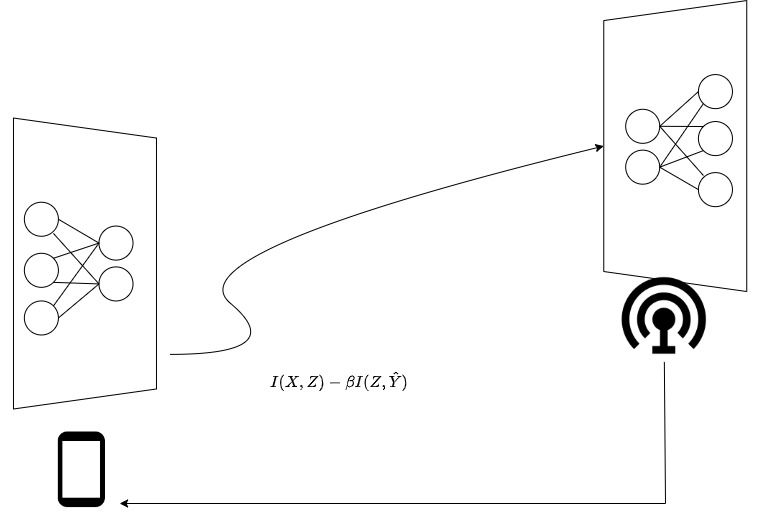
In 1949, Shannon and Weaver categorized the problem of communications into three levels, namely (i) the technical: transmission of symbols; (ii) the semantic: transmission of meaning; and (iii) the effectiveness: effect of semantic information exchange. While Shannon’s communication model considers the technical aspect only. There is a growing interest in re-examining this fundamental consideration and incorporating semantics into the 6G fabric. In Shannon’s communications theory, a bit is the smallest unit of “information”. In this project, we are interested in exploring how theoretical and practical advances in machine learning can be used to redefine the atomic unit of a packet, moving beyond Shannon’s statistical bit of information to a contextual (or operational) iota of information. That is, by incorporating effective semantics, we can move to goal-oriented autonomic protocols that enable and improve the network. Central to the research is the exploration of machine learning advances, particularly the information-bottleneck (IB) theory and generative AI, to improve networking protocols. The project aims to integrate these paradigms into a new framework of semantic-based protocols, transcending the traditional bit-level communication model.
</div>
Team



Publications
- Topology-Preserving Deep Joint Source-Channel Coding for Semantic Communication
O. Erak, O. Alhussein, F. Fang, and S. Muhaidat
CoRR abs/2603.17126, 2026.
Download pre-print - Contrastive Learning and Adversarial Disentanglement for Privacy-Aware Task-Oriented Semantic Communication
O. Erak, O. Alhussein, and W. Tong
IEEE Internet of Things J., vol. 13, no. 12, pp. 25948–25965, 2026.
Download pre-print · Code available - Adaptive Token Merging for Efficient Transformer Semantic Communication at the Edge
O. Erak, O. Alhussein, H. Abou-Zeid, M. Bennis, and S. Muhaidat
IEEE Open J. Commun. Soc., vol. 7, pp. 4112–4128, 2026.
Download pre-print - Adaptive Pareto-Optimal Token Merging for Edge Transformer Models in Semantic Communication
O. Erak, O. Alhussein, H. Abou-Zeid, and M. Bennis
in Proc. IEEE Globecom Workshops, 2025, pp. 466–471.
Download pre-print - Encoder decoder-based Virtual Physically Unclonable Function for Internet of Things device authentication using split-learning
R. Khan, H. B. Eldeeb, B. Mefgouda, O. Alhussein, H. Saleh, and S. Muhaidat
Computers & Security, vol. 148, p. 104164, 2025.
Download paper - Layer-wise federated learning for mobile networks
M. Hosseini, O. Alhussein, and A. Akhavain
CoRR abs/xxx.
Download pre-print - Dynamic Encoding and Decoding of Information for Split Learning in Mobile-Edge Computing: Leveraging Information Bottleneck Theory
O. Alhussein, M. Wei, and A. Akhavain
in Proc. IEEE Globecom, 2023, pp. 1–6.
Download paper